Guide
I was a passenger in a car accident, who do I sue?
I was a passenger in a car accident, who do I sue? Usually you claim on insurance first. Which policy pays, in what order, and when a lawsuit comes in.
Updated October 14, 20267 min readReviewed by My Wreck Check Editorial Team, editorial review: primary sources checked and independently fact-checked
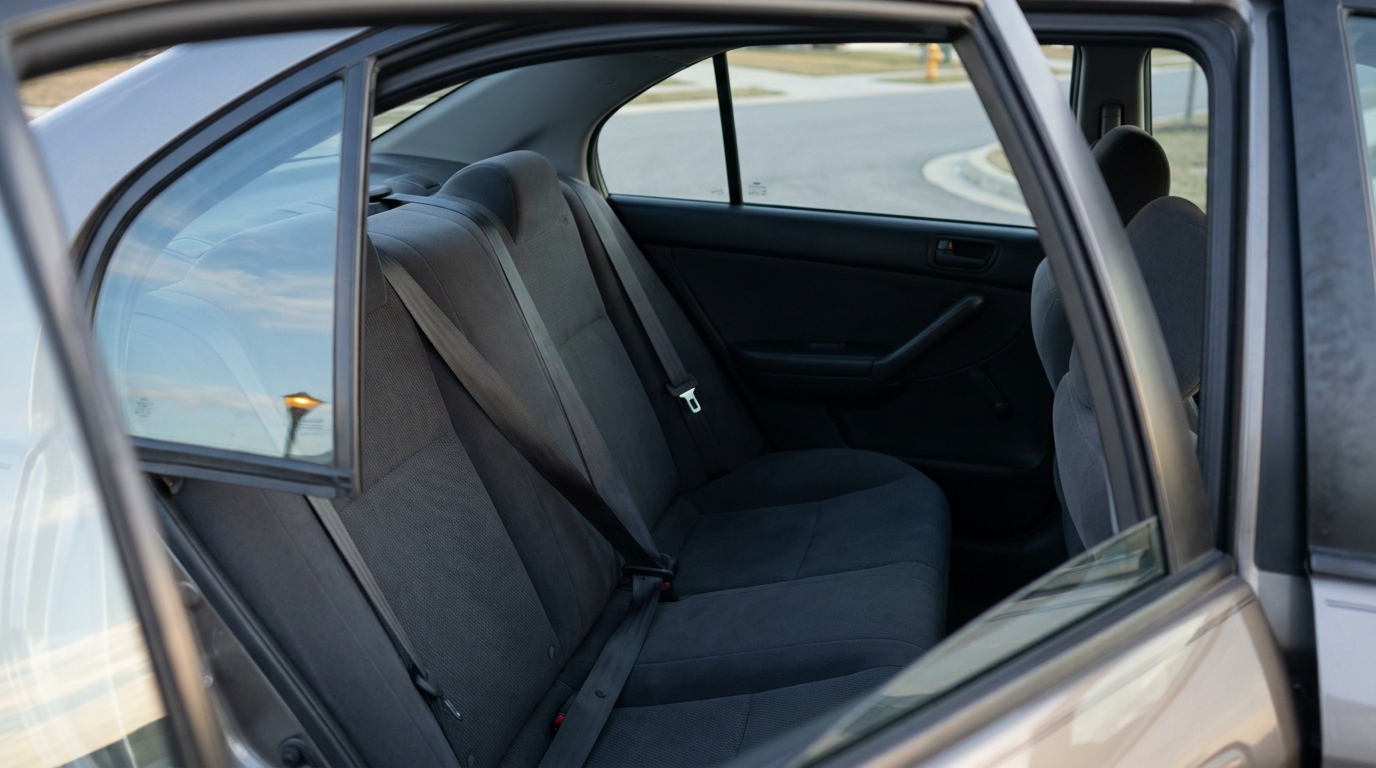
I was a passenger in a car accident, who do I sue? Usually nobody, at least not at first. A passenger's injuries are normally paid through insurance claims. In no-fault states such as Florida and New York, no-fault coverage such as personal injury protection (PIP) pays first; Florida's law pays those benefits "without regard to fault." Beyond what it covers, the claim points at whoever caused the crash. In both states, a lawsuit for pain and suffering comes in only past a legal threshold.
I was a passenger in a car accident, who do I sue: the short answer
You weren't driving, so for a passenger the question is less "who do I sue" than "whose insurance pays, and in what order." The money can come from these places:
- No-fault benefits (PIP), where your state has them. Florida's no-fault law, for example, exists to provide medical and disability benefits "without regard to fault".
- The at-fault driver's liability coverage. In Texas, TDI says liability coverage pays "the other driver's and his or her passenger's medical bills and some other expenses," up to the policy limit.
- Uninsured/underinsured motorist coverage (UM/UIM). This applies when the driver who caused it had no insurance, or not enough.
- A lawsuit against the driver or drivers who caused the crash, when your state's rules allow it.
The pillar guide on how a car accident claim works explains the difference between a claim on your own policy and one against another driver's. Here the focus is on what changes when you were the one in the passenger seat.
Step one: whose no-fault coverage pays a passenger
States split hard on this, and not in the way most people guess. Florida and New York sit at opposite ends.
Florida checks your own insurance first. Under Florida Statutes 627.736, an owner's PIP insurer covers "accidental bodily injury sustained in this state by the owner while occupying a motor vehicle", and that means any motor vehicle, not just their own. It also pays for a relative living in the owner's household who doesn't own a car that needs PIP. The PIP on the car you were riding in pays you only if you aren't an owner of a car that needs PIP and aren't entitled to benefits from that owner's insurer some other way. In practice:
- you own a car with Florida PIP: your own PIP pays;
- you don't, but a relative you live with does: their PIP pays;
- neither: the PIP on the car you were in pays.
Florida PIP pays 80 percent of reasonable medical expenses and 60 percent of lost gross income, to a limit of $10,000 in medical and disability benefits. It pays medical benefits only if you get initial care within 14 days of the crash, and if a provider finds you did not have an emergency medical condition, medical benefits stop at $2,500.
New York starts with the car you were in. For a crash in New York State, the Department of Financial Services says that "generally" you "should file your No-Fault claim with the insurer of the vehicle you were in when the accident occurred." If the crash happened outside New York and you were in a vehicle other than your own, you file with your own insurer. Bus passengers are different again: their benefits come from their own auto policy or a household member's, and from the bus's insurer only if neither exists. Notice of the claim is due "in no event more than 30 calendar days after the date of the accident" unless you can give written proof justifying the late filing. The DFS no-fault FAQ also notes that the operator or passenger of a motorcycle is excluded from no-fault benefits.
At-fault states and optional coverage. Where your state doesn't require PIP, a passenger's first money may still come from a policy in the car. The Texas Department of Insurance says PIP "pays your and your passengers' medical bills" and also lost wages, and that all Texas auto policies include it unless the policyholder turns it down in writing. Medical payments coverage, TDI adds, "also pays if you're hurt while riding in someone else's car." So if you have your own auto policy, it's worth reading your declarations page even though you weren't driving.
Step two: whose liability coverage answers for the rest
Liability coverage pays for injuries its driver causes to other people. TDI describes it as paying "the other driver's and his or her passenger's medical bills and some other expenses" when the policyholder caused the accident. For a passenger, there are two situations:
- The other driver caused it. Your claim goes to that driver's liability insurer.
- The driver you were riding with caused it. Ask that driver's insurer, in writing, whether the policy's liability coverage applies to people riding in the insured car, and read the answer against the policy wording.
Then there's the policy limit. Texas requires at least $30,000 of coverage for injuries per person, up to $60,000 per accident. The per-accident figure is the most that coverage pays for everyone hurt in one crash, which matters when several passengers were injured. If the limits aren't enough to cover your medical bills, TDI says to "file a claim with your auto insurance company or your health insurance company," which may pay the difference through PIP, medical payments or uninsured/underinsured motorist coverage, and "you might have to pay a deductible."
Step three: uninsured and underinsured drivers
If the driver who caused the crash had no insurance, or too little, uninsured/underinsured motorist coverage is designed for that. TDI says it "pays if you're hit by someone who didn't have insurance or didn't have enough to pay your medical and car repair bills," and "it also pays if you're in a hit-and-run accident." Texas insurers must offer it. Ask both the insurer of the car you were in and your own insurer, if you have one, whether their UM/UIM coverage applies to you as a passenger.
If you claim under medical payments or uninsured motorist coverage, the California Department of Insurance says you "must provide documentation of your loss," meaning injuries, medical expenses and lost wages. At the scene, it also advises getting the names, addresses and phone numbers of other passengers and any witnesses.
When a passenger can actually sue
So, I was a passenger in a car accident, who do I sue if the insurance claims don't cover it? The lawsuit, if there is one, is against whoever caused the crash; New York's DFS puts it as suing "the party responsible for the accident." In Florida and New York, a suit for pain and suffering has a threshold first.
Florida. Under section 627.737, an owner, operator or occupant of a properly insured vehicle is exempt from tort liability to the extent PIP benefits are payable. A plaintiff may recover damages for pain, suffering, mental anguish and inconvenience only if the injury includes:
| Florida threshold for pain-and-suffering damages | |
|---|---|
| (a) | Significant and permanent loss of an important bodily function |
| (b) | Permanent injury within a reasonable degree of medical probability, other than scarring or disfigurement |
| (c) | Significant and permanent scarring or disfigurement |
| (d) | Death |
New York. Insurance Law 5104 says "there shall be no right of recovery for non-economic loss, except in the case of a serious injury, or for basic economic loss." DFS puts the serious-injury rule in plainer words: "You may sue another driver if he or she caused the accident that injured you and you sustain a 'serious injury'." Separately, DFS says you can sue the party responsible to recover costs that exceed your policy limit.
There is also a deadline for filing a lawsuit. In Florida, an action founded on negligence must be brought within two years under section 95.11(5)(a). If the crash happened in another state, check that state's deadline.
Your options, starting with the one that asks least of you
If you're still asking "I was a passenger in a car accident, who do I sue," most of the work is finding the right policy and claiming on it in the right order. Once a claim is open, the settlement and release work the same way they do for a driver; the guide to what a car accident settlement covers explains that part. Whether you need a lawyer is a separate question, covered in do you actually need a lawyer after a crash?
This site gives no legal advice. For a decision about your own claim, a licensed attorney in your state is the right person to ask.
Bottom line
A passenger's claim usually runs through insurance: no-fault benefits where your state has them, the liability coverage of whoever caused the crash, and uninsured/underinsured motorist coverage when that falls short. A lawsuit is against whoever caused the crash, and in Florida and New York one for pain and suffering needs an injury past a legal threshold. Find out which state's rules apply to your crash and how long you have.
Common questions
Can a passenger sue the driver of the car they were in?
New York's Department of Financial Services says you can sue "the party responsible for the accident" to recover costs above your policy limit, and that you may sue another driver who caused the accident if you sustain a serious injury. Whether a passenger can claim against the driver they rode with, and how, is a question for a licensed attorney in your state.
Whose PIP pays when I was a passenger in Florida?
Under Florida Statutes 627.736, your own PIP pays if you own a car that must carry Florida PIP. If you don't, a resident relative's PIP pays. If neither applies, the PIP of the car you were in pays.
Whose no-fault insurance pays a passenger in New York?
For a crash in New York State, the Department of Financial Services says you should generally file the no-fault claim with the insurer of the vehicle you were in. Notice is due no more than 30 days after the accident unless you can justify the delay in writing.
What if the driver who caused the crash had no insurance or too little?
Uninsured/underinsured motorist coverage is built for that. The Texas Department of Insurance says it pays if you're hit by someone who didn't have insurance or didn't have enough to pay your medical and car repair bills.
How long does a passenger have to file a lawsuit?
In Florida, an action founded on negligence must be brought within two years under section 95.11(5)(a). If the crash happened in another state, check that state's deadline.
Sources
- Florida Statutes 627.731: Purpose of the no-fault law
- Florida Statutes 627.736: Required personal injury protection benefits
- Florida Statutes 627.737: Tort exemption; limitation on right to damages
- Florida Statutes 95.11: Limitations other than for the recovery of real property
- New York DFS: Filing claims under your own policy
- New York DFS: Consumer FAQs about no-fault insurance
- New York Insurance Law 5104: Causes of action for personal injury
- Texas Department of Insurance: Auto insurance guide
- California Department of Insurance: So you've had an accident, what's next?
By My Wreck Check Editorial Team. First published October 14, 2026. Advertiser disclosure
Keep reading