Guide
How to tell who is at fault in a car accident
How to tell who is at fault in a car accident: who decides, what evidence counts, and how shared fault changes recovery in Texas and Florida.
Updated October 26, 20268 min readReviewed by My Wreck Check Editorial Team, editorial review: primary sources checked and independently fact-checked
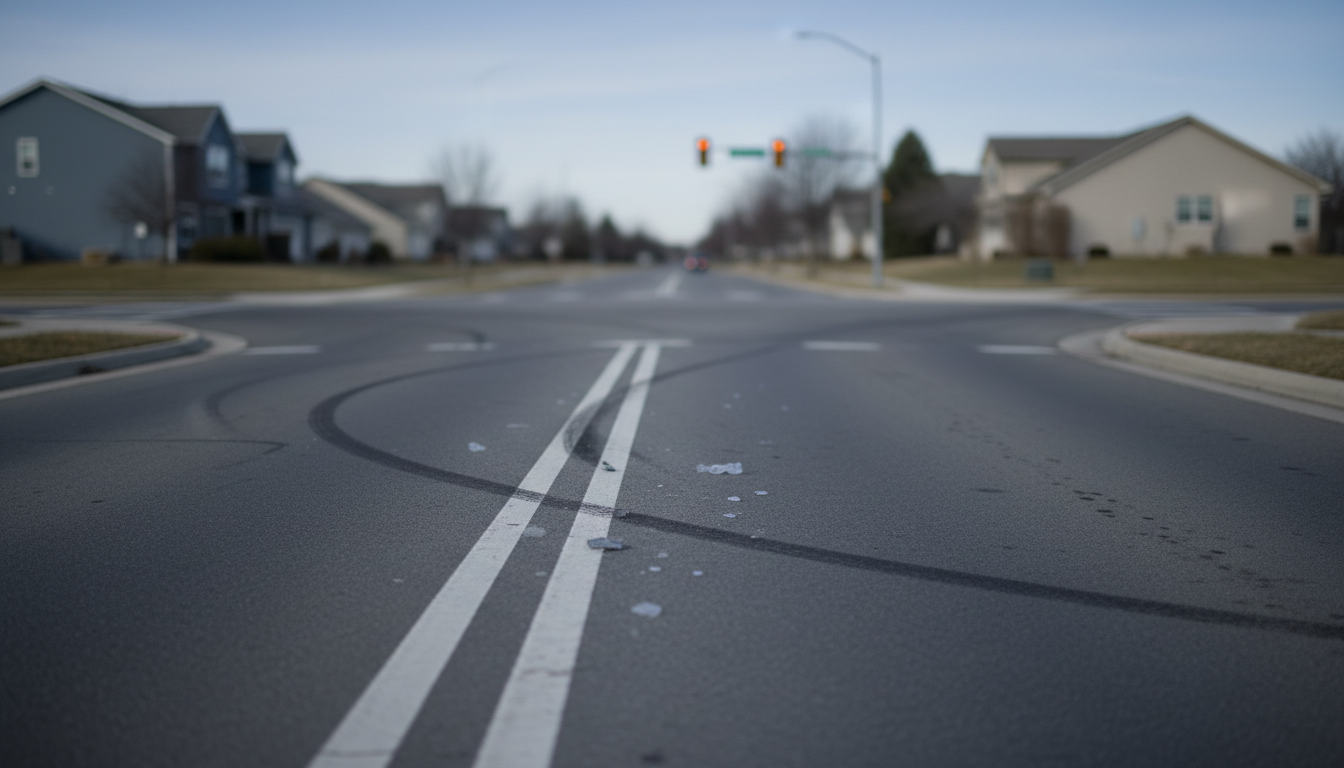
There's no single referee who settles fault the moment a crash happens. Figuring out how to tell who is at fault in a car accident starts with knowing who is doing the deciding: an insurance adjuster decides for the claim, a police officer records what they saw, and if the dispute goes to court, the court sets each driver's share. They all look at the same kind of evidence (witnesses, photos, the scene, the rules of the road), and the answer is often a percentage instead of one name.
Who determines fault in a car accident
The adjuster decides for the claim, and the police and the courts can weigh in too. Texas's Office of Public Insurance Counsel describes a claims adjuster as someone who "reviews the loss to figure out what is covered under the policy, if liability exists, and how much is owed." On a claim against the other driver's policy, its list of potential problems is blunt: "The other driver's company must agree it was their driver's fault." That company is also, in the same page's words, "on their driver's side."
An officer at the scene writes the crash report, and insurers ask for it. California's Department of Insurance puts the police alongside the insurers and the courts in its auto insurance consumer guide: "In many accidents, both drivers share the fault. The police, the insurance companies, or the courts, decide the comparative negligence."
If the two sides can't settle it, a court can. In Texas, Civil Practice and Remedies Code 33.003 says "the trier of fact," meaning whoever decides the facts at trial, "shall determine the percentage of responsibility" for each claimant, each defendant, each settling person and each designated responsible third party.
The state insurance department doesn't decide fault, at least in Texas. The Texas Department of Insurance takes complaints about insurers, but it says plainly: "we can't decide who was at fault in an accident or determine damage amounts."
How to tell who is at fault in a car accident: the evidence
So how is fault determined in a car accident? Whoever is deciding asks the same thing: what happened, and who broke a rule of the road. Learning how to tell who is at fault in a car accident mostly means knowing which kinds of evidence carry weight.
Start with witnesses. The Texas Department of Insurance says, "Independent witnesses can help prove fault if you were in an accident caused by another driver." It also warns about the opposite case: "If you don't have witnesses and the other driver denies fault, his or her insurance company might deny your claim."
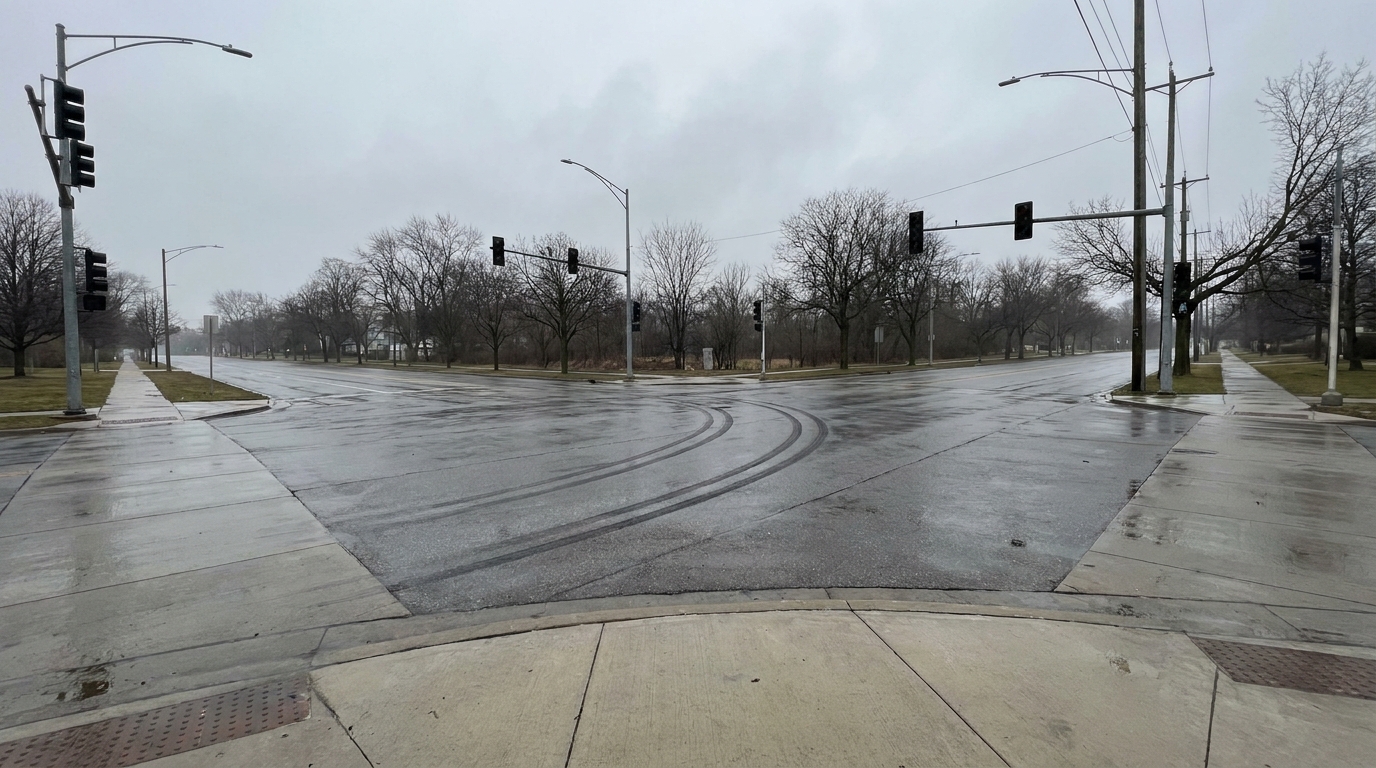
Then there's the scene. The NAIC lists what to record: the time, date and exact location, "with notes of skid marks, weather, and road conditions." Texas's public insurance counsel adds: "Photos, witness contact information, the police report, damage estimate, and repair shop contacts can all be helpful."
The police report matters too. The Texas Department of Insurance tells drivers to send their insurer copies of the police accident report, noting that "it usually takes a few days for the police officer to file a report," and to get the officer's name and badge number so they can follow up.
So does what you say and sign. California's Department of Insurance, in its guide to what happens after an accident, advises drivers: "Do not sign statements regarding fault or promise to pay for the other parties damages."
Does the police report decide who is at fault?
It's strong evidence for an adjuster, but it isn't the final word, and state law limits how it can be used. Florida is a clear example. Under Florida Statutes 316.066, a crash report made by a person involved in the crash, and what that person tells the officer to complete it, "may not be used as evidence in any trial, civil or criminal." Traffic tickets have a similar limit: under Florida Statutes 316.650, citations "shall not be admissible evidence in any trial," apart from narrow exceptions such as fraud or forgery cases.
So a ticket for the other driver is something an adjuster will notice, but in Florida it isn't the same thing as a court's finding of fault. Other states have their own evidence rules, and a lawyer in your state can explain how they work there.
When both drivers share the blame
Many crashes don't have one fully guilty driver. California's insurance department defines comparative negligence as "the percent of responsibility that each driver shares in an accident when both drivers are at fault." What that percentage costs you depends on your state's statute.
In Texas, under Civil Practice and Remedies Code 33.001, a claimant "may not recover damages if his percentage of responsibility is greater than 50 percent." Below that line, section 33.012 has the court reduce the damages "by a percentage equal to the claimant's percentage of responsibility."
In Florida, Florida Statutes 768.81 says contributory fault "diminishes proportionately the amount awarded as economic and noneconomic damages" but does not bar recovery, with one exception: a party "found to be greater than 50 percent at fault for his or her own harm may not recover any damages." The statute's history lists a 2023 amendment (chapter 2023-15), which is a good reason to check the current text rather than an older summary.
Other states set their own rules. Don't assume the Texas or Florida rule applies where you live.
This is why the exact percentage gets argued over. In Texas or Florida, the difference between 50 and 51 percent is the difference between a reduced recovery and none.
No-fault states: where fault matters less, but still matters
In Florida, a no-fault state, your own PIP pays the first layer of injury costs. Florida's no-fault law says its purpose, in Florida Statutes 627.731, is to provide medical, surgical, funeral and disability benefits "without regard to fault." Florida Statutes 627.736 requires personal injury protection (PIP) "to a limit of $10,000 in medical and disability benefits," and medical benefits cover 80 percent of all reasonable expenses for medically necessary care if you get initial care within 14 days of the crash, with medical benefits limited to $2,500 if a provider finds you did not have an emergency medical condition.
Fault comes back when the losses go beyond that. Florida Statutes 627.737 exempts insured drivers from tort liability to the extent PIP benefits are payable, and allows damages for pain, suffering, mental anguish and inconvenience only when the injury includes significant and permanent loss of an important bodily function, permanent injury within a reasonable degree of medical probability, significant and permanent scarring or disfigurement, or death. Once a claim clears that bar, the comparative fault rule in 768.81 applies to it.
The no-fault checker shows how the states we have verified handle this.
Fault can also follow you to your premium
An at-fault finding can cost you twice. California's Department of Insurance says: "If the accident is not your fault, your insurance company does not charge you more. If you are at least 51% at fault, your premium can go up when you renew your policy." Other states and insurers set their own rules.
If you disagree with how fault was decided
Knowing how to tell who is at fault in a car accident helps most when the insurer sees it differently. The routes depend on whose insurer it is.
- If the other driver's insurer refuses to pay, the Texas Department of Insurance points to your own policy: "If you believe the other driver was at fault, but his or her insurance company won't pay your claim, file a claim with your own insurance company. You must have collision coverage to do this." Your company "will probably try to collect from the other driver's company," and you'll pay your deductible.
- Appraisal won't settle fault. In Texas, "the appraisal process is for disputes about the amount of your claim," and you "can't use it to resolve disputes with another person's insurance company."
- A complaint to the Texas Department of Insurance "must be in writing," but as noted above, the department can't decide fault.
- Court is the last stop. TDI says "you might have to file a lawsuit to resolve the issue," and "if your claim is for less than $20,000, you can use Justice Court."
With your own insurer, the NAIC reminds policyholders that "your insurer doesn't have the last word," and suggests the consumer services staff at your state insurance department if you still disagree.
Your options, from least to most involved
For how the whole claim fits together, see how a car accident claim works. If fault is clearly on the other driver, the guide on what to do after a crash that was not your fault covers the first days. These are the realistic routes, starting with the one that asks least of you.
The case-review option above lists disputed fault among the situations it fits. The guide do you actually need a lawyer after a crash? sets out where the line usually falls. For a decision about your own claim, ask a licensed attorney in your state; this site gives no legal advice.
Bottom line
Several people decide fault, at different stages. An adjuster decides it for the claim, the police report feeds into that, and a court has the final say if it gets that far. Your state's rules decide what a shared percentage costs you, and in Texas and Florida, anything over 50 percent for your own harm means no recovery.
Common questions
Who determines fault in a car accident?
Several people, for different purposes. California's Department of Insurance says the police, the insurance companies or the courts decide each driver's share. An insurer's adjuster decides it for the claim, and if the case goes to trial in Texas, the trier of fact sets each party's percentage of responsibility.
Does the police report decide who is at fault?
Not on its own. Insurers ask for it, and Texas's Department of Insurance tells drivers to send the company a copy. But in Florida, what a driver tells an officer for the crash report may not be used as evidence in any trial, and a traffic citation is generally not admissible evidence at trial either.
Can I still recover money if I was partly at fault?
It depends on your state. In Texas and Florida, a person found more than 50 percent at fault for their own harm recovers nothing, and below that line the damages are reduced by their share of the fault. Other states use other rules.
Does fault matter in a no-fault state?
Less for the first medical bills, but it still matters. In Florida, your own personal injury protection pays up to $10,000 in medical and disability benefits, and a claim for pain and suffering against the other driver is allowed only for serious injuries the statute lists, such as permanent injury.
Can the state insurance department decide who was at fault?
In Texas, no. The Texas Department of Insurance takes written complaints about insurers but says it can't decide who was at fault in an accident or determine damage amounts. A disputed fault question may end up in court.
Sources
- Texas Department of Insurance: Auto insurance guide
- Texas Office of Public Insurance Counsel: Information on third-party auto claims
- California Department of Insurance: Automobile insurance consumer guide (PDF)
- California Department of Insurance: So you've had an accident, what's next?
- NAIC: What you should know about filing an auto claim
- Florida Statutes 768.81 (comparative fault)
- Florida Statutes 316.066 (crash reports)
- Florida Statutes 316.650 (traffic citations)
- Florida Statutes 627.731 (purpose of the no-fault law)
- Florida Statutes 627.736 (personal injury protection benefits)
- Florida Statutes 627.737 (tort exemption and limitation)
- Texas Civil Practice and Remedies Code 33.001 (proportionate responsibility bar)
- Texas Civil Practice and Remedies Code 33.003 (determination of percentage of responsibility)
- Texas Civil Practice and Remedies Code 33.012 (amount of recovery)
By My Wreck Check Editorial Team. First published October 26, 2026. Advertiser disclosure
Keep reading